San Rafael Sanitation District · 2025–present · Hydraulic modeling
Downtown collection system capacity assessment
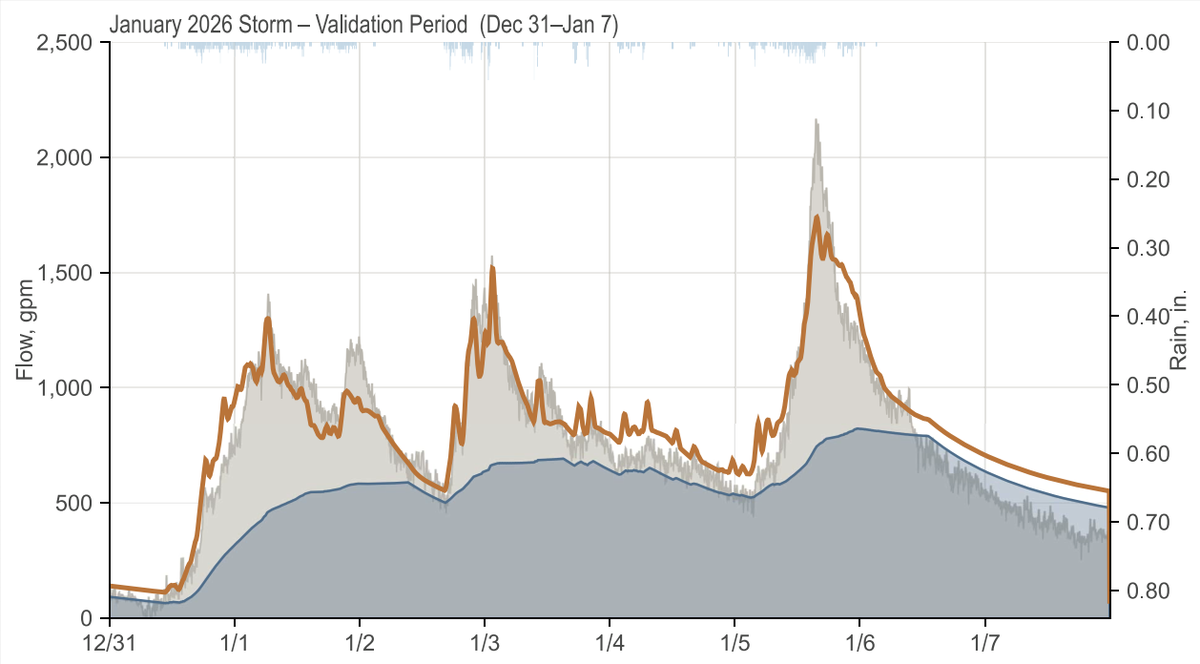
Large developments proposed downtown needed a defensible picture of wet-weather sewer capacity. EEI built a 2,200-node EPA SWMM model from a survey of about 285 manholes and six new flow meters, modeling each metered sewershed with antecedent moisture to capture its RDII. The assessment pinpoints chokepoints at the 10-year, 24-hour storm, and District staff are being trained to run the model.
City of Pacifica · 2023–2025 · Hydraulic modeling, design, and construction services
Peralta–Linda Mar trunk sewer and manhole improvements
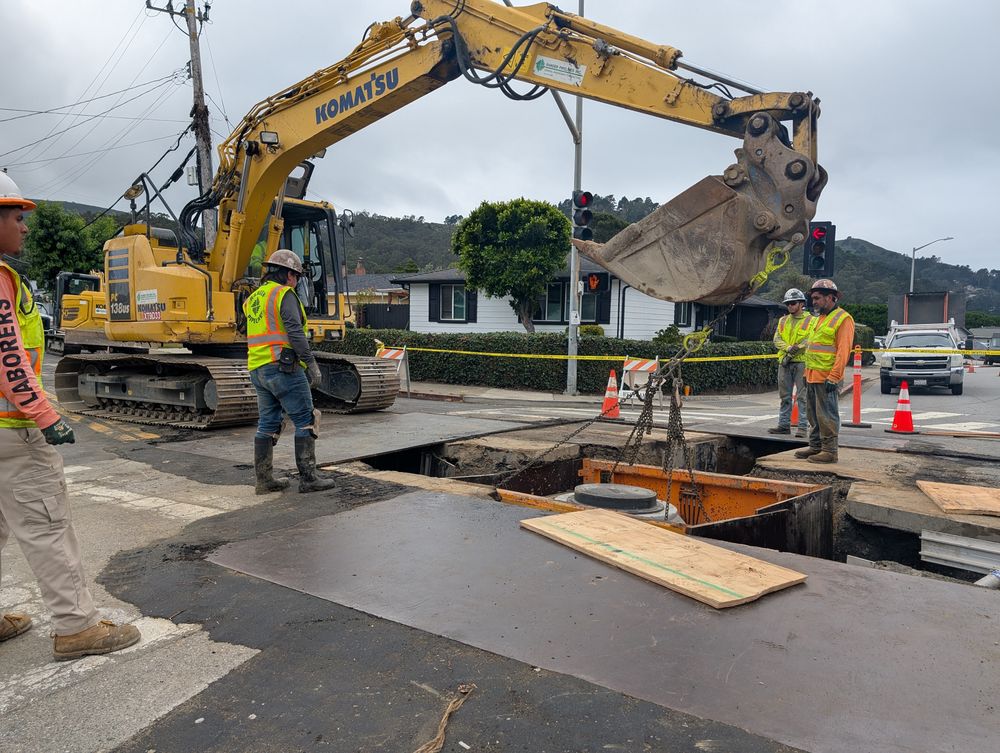
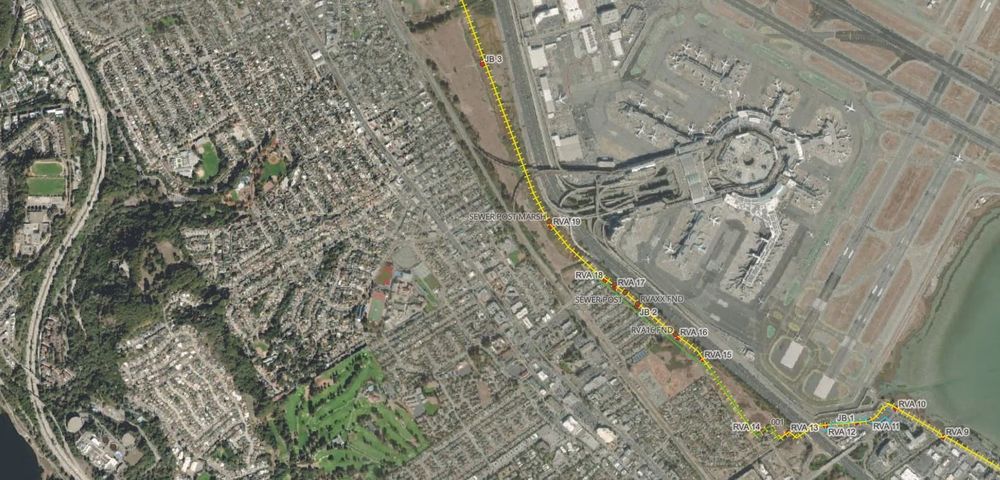
Modeling, conceptual through final design, and construction engineering to add capacity in a crowded utility corridor under busy streets. By replacing a manhole and improving its inlet approaches, about 900 feet of planned upsizing in Linda Mar Boulevard was eliminated, and maintenance access was improved. When excavation uncovered additional buried gas facilities, we worked with the contractor to relocate the critical manhole replacement and keep project costs down.
City of Sacramento Department of Utilities · 2024–2025 · Condition assessment
Sump 85 force main condition assessment program development
Won through an RFP, the program used the vital, previously failed Sump 85 force main as its template: records and a risk model, field location of a line whose appurtenances were about 40 percent undocumented, ultrasonic thickness testing, and a net-present-value go/no-go method. The City chose to begin replacement and adopted SOPs and a roughly seven-year program plan shared across four divisions.
City of Millbrae · 2024 · Condition assessment
Phase 1 force main condition assessment program
Three critical force mains (10, 14, and 39 inches), two of them in open space that is habitat for federally listed threatened and endangered species. We made the case for understanding their condition and O&M and laid out simple, broadly applicable actions to cut risk before costly specialized assessment. The City gained a path to restart maintenance immediately, begin replacing one force main, and a detailed scope for Phase 2.
City of Davis · 2022 and 2024 · Condition assessment, planning
SLS-1 force main assessment and sewershed transfer feasibility
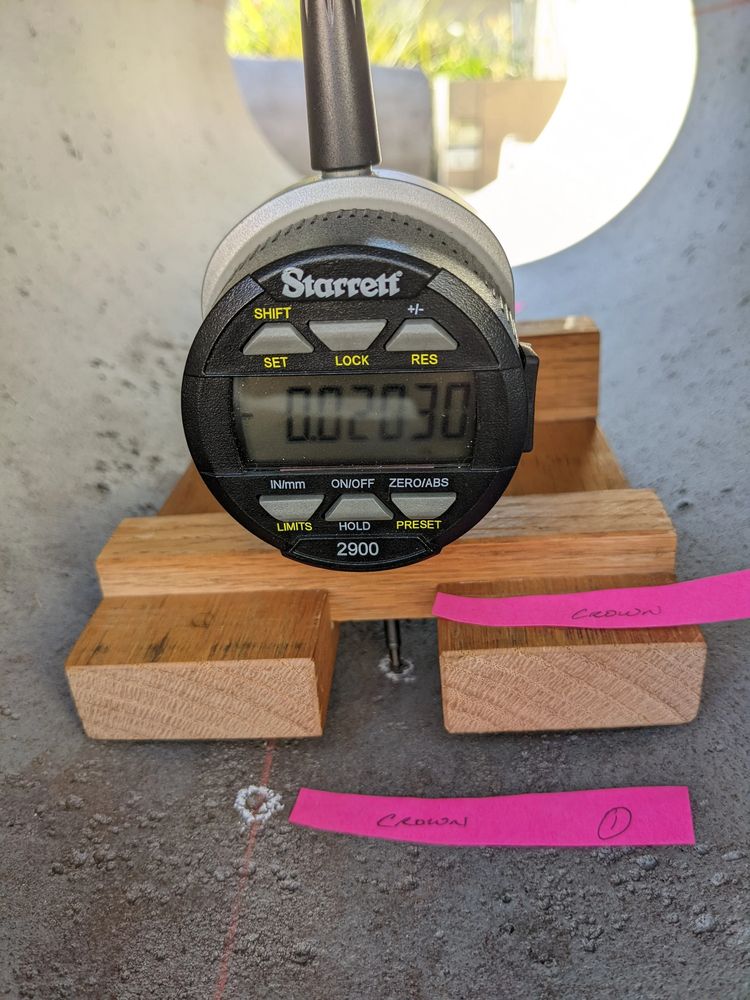
Records research, ground-penetrating radar, and a risk model for a 14-inch ductile iron force main that drains about a quarter of the city. A 20-foot section installed around 1972 was excavated and its corrosion pits measured to estimate remaining life. The City began replacement immediately, and a follow-on study found a fallback route that repurposes an existing conduit to avoid much of the highway and railroad permitting.
City of Redwood City · 2018 · Emergency planning
Risk assessment-based drinking water emergency response plan
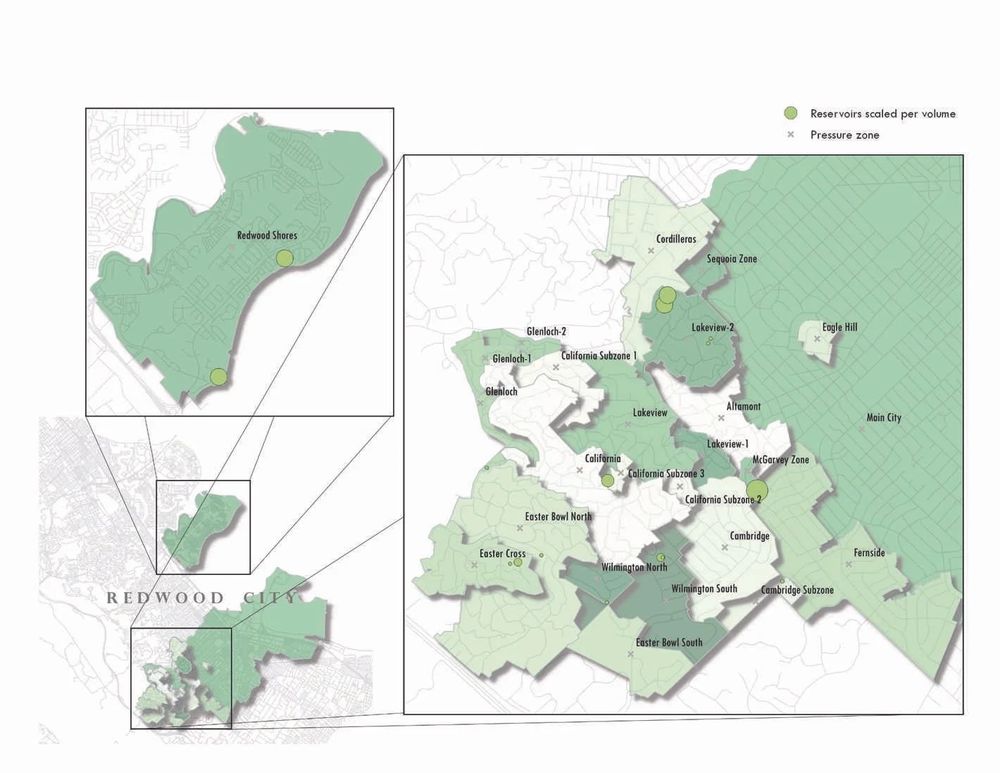
An emergency response plan for the City’s drinking water utility, built on AWWA J100 (RAMCAP) risk and vulnerability assessments and community threat-cost estimates. For a system of 25,000 connections, 12 reservoirs, and 21 pressure zones that relies on a single wholesale supply source, that analysis gave the plan depth and immediate credibility with staff and management.
San Rafael Sanitation District · 2016–present · Condition assessment, CIP
Force main condition assessment program and replacement CIP
A 16-element risk model for 15 miles of force mains in 774 segments, built into a GIS desktop tool District managers use to update risk and run what-if analyses. Level 1 and Level 2 assessments are moving the model from predictive to a hybrid of predictive and observed data, and the replacement CIP ties annual funding to risk reduction and a completion timeline.